The farewell ceremony for a loved one is a meaningful moment. Nature offers a unique setting – carried by gentle sounds, intense colours and an incomparable atmosphere beneath the wide open sky. What are the possibilities?
In Switzerland, scattering ashes is possible under certain conditions. So that the farewell takes place in accordance with legal requirements and ethical principles, the following aspects should be observed:
The feelings of others – including uninvolved persons – must not be hurt when the ashes are scattered.
The ashes should be as free of heavy metals as possible in order to protect the environment.
They should be scattered in such a way that they remain unobtrusive and dissolve quickly.
It is advisable to enquire with the responsible authorities about the regulations beforehand.
Once these questions have been clarified, practical considerations about the choice of place and the form of the farewell should follow.
By the water
A burial in a lake is idyllic, but carrying it out can be challenging. Scattering directly from the shore is not permitted. A long jetty, or better still a boat, offers a solution. In shallow waters the ashes can be scattered at a distance and with dignity, if necessary while wearing boots.
Flowing waters also hold challenges: the ashes sink quickly to the bottom and do not drift along with the river. The water discolours temporarily. Accompanying symbols such as flowers or floating candles are often driven back to the bank by the current, which can disturb the symbolism of the farewell. Scattering from a bridge or a jetty is therefore preferable.
Is the place secluded enough for an undisturbed ceremony?
Could walkers or dogs off the lead cause a disturbance?
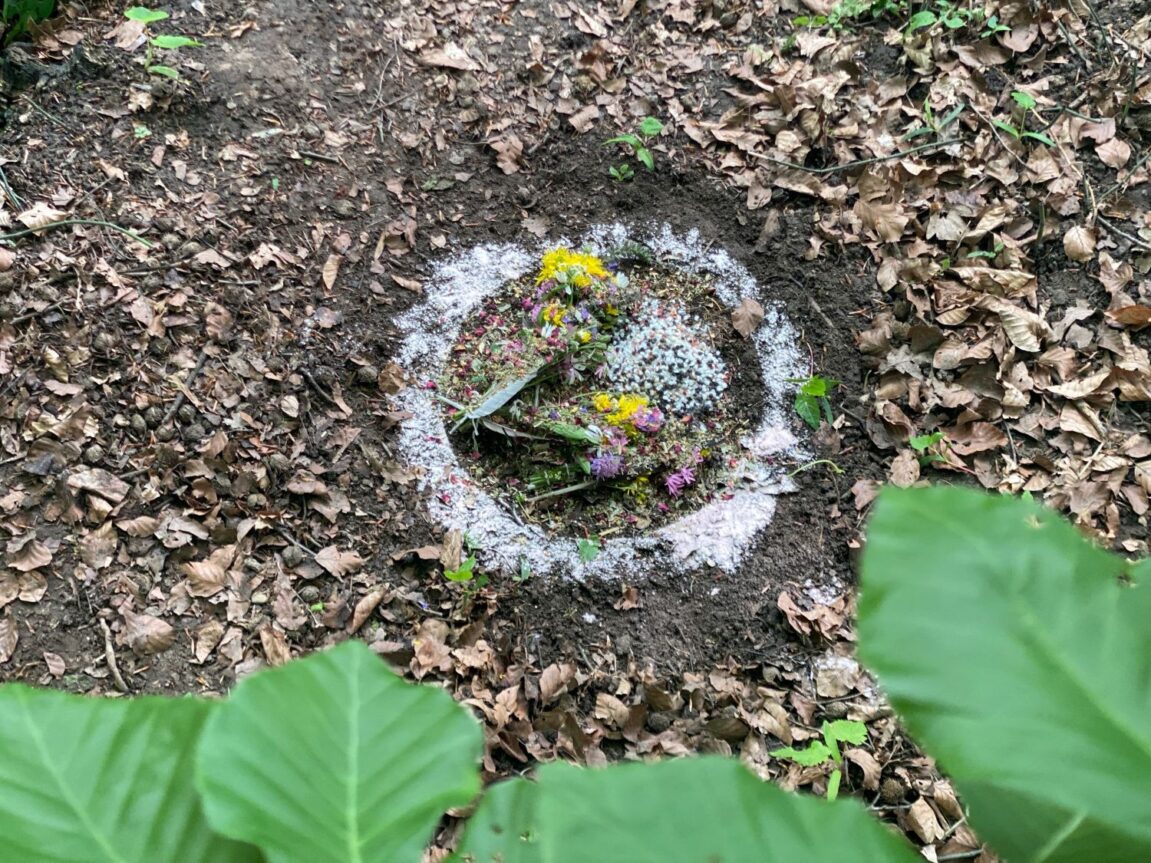
Once a suitable place has been found, it can be prepared in advance. When scattering the ashes, attention must be paid to the wind conditions. Nobody wants them to be blown about uncontrollably. Terrarium sand in various colours can help to integrate the ashes with dignity.
In the mountains
The ashes should not be scattered directly beside hiking trails but in a quiet, sheltered place. Since they can temporarily leave a fine grey film over plants, rain helps with the natural dissolution. Colourful flower petals can make the farewell visually gentler.
When planning a farewell ceremony in nature, it is important to take the needs and possibilities of the mourners into account:
Accessibility: Is the place easy to reach? Is it close to parking or public transport?
Course of the ceremony: Could a memorial service take place in a venue, followed by a joint scattering? A silent funeral procession can create a dignified connection.
Scattering the ashes: Before the occasion it is essential to clarify how the chosen urn is opened.
Weather conditions: Should an alternative date be planned in case of rain?
Dividing the ceremony: Separating the memorial service from the scattering of the ashes has proved its worth – the scattering can take place later in a smaller circle.
The urn
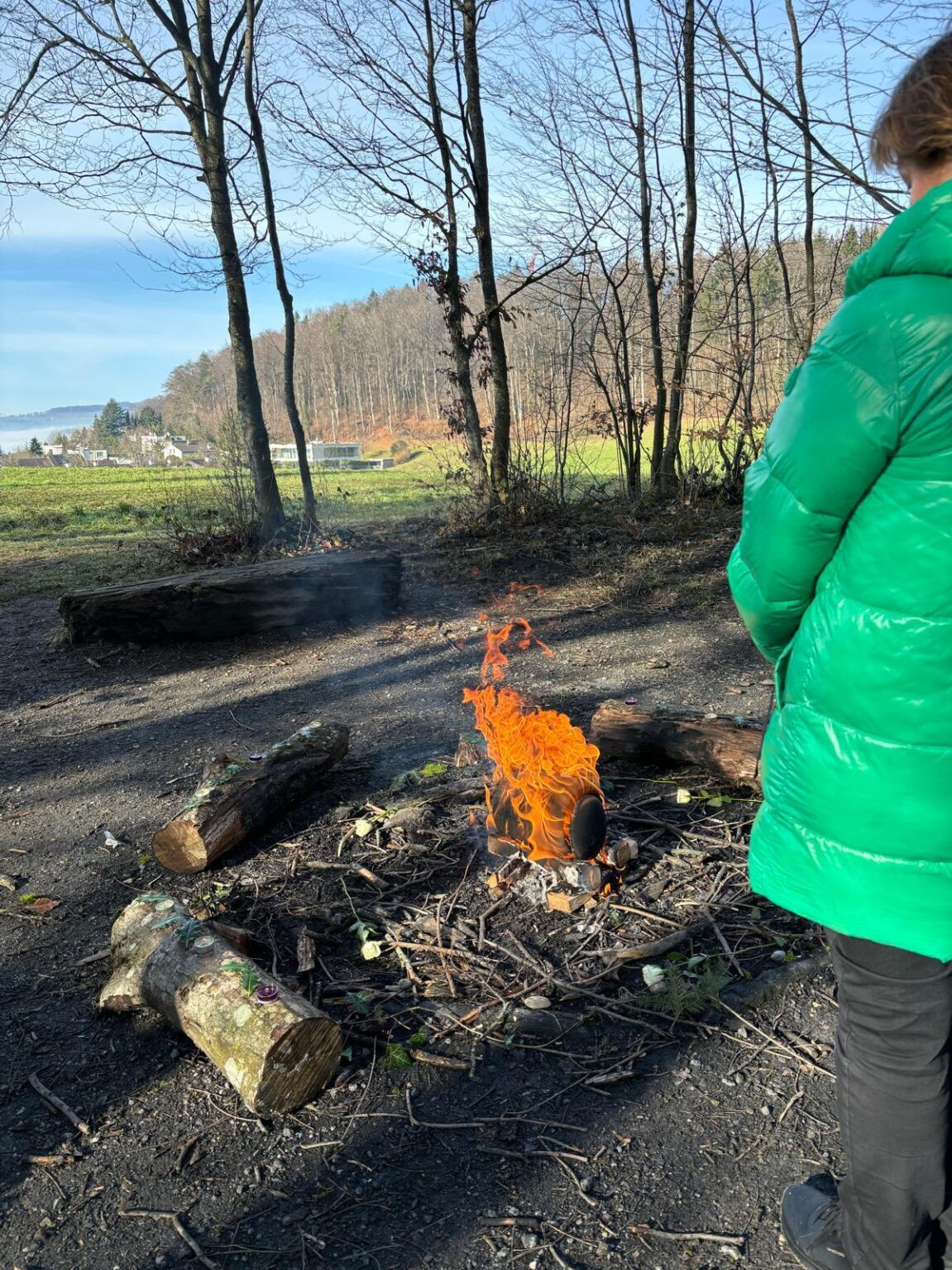
Has the grieving family already considered what should happen to the emptied urn? What matters is that it is made of environmentally friendly materials. A ceremonial transition, for instance in a fire specially provided for the purpose, can round off the farewell process with dignity. This can also take place at a later date.
A farewell is not only a moment of letting go, but also an opportunity to honour a life and its memory. Nature offers a space for reflection in which the past is valued and the future preserved with love.
Celebrants
As funeral celebrants we stand by our clients with empathy, advise them individually and, on request, take on those individual steps that are particularly difficult.